
Energy-Efficient Shades in Rochester Hills: A Guide to Comfort, Insulation, and Light Control
Windows bring natural light into a home, open rooms to outdoor views, and contribute to the overall character of an interior. They can also be a source of unwanted heat gain during warm weather and heat loss during colder months. In a climate with cold Michigan winters, warm summers, and changing sunlight throughout the year, choosing the right window treatments can make rooms feel noticeably more comfortable.
Energy-efficient shades in Rochester Hills help manage the area between the window glass and the interior of the home. When properly selected, measured, and installed, they can provide an additional insulating layer while also controlling sunlight, glare, and privacy. They will not replace efficient windows or a properly operating heating and cooling system, but they can become a valuable part of a home’s overall comfort strategy.
Homeowners searching for energy-efficient shades in Rochester Hills have several options to consider. Cellular shades are widely recognized for their insulating construction, but Roman shades, roller shades, layered treatments, and certain other products can also contribute to comfort when designed appropriately.
The right shade depends on much more than its general style. Fabric opacity, construction, fit, mounting method, window exposure, and daily operation all influence performance. Understanding these factors will help you choose a treatment that supports both energy efficiency and the appearance of your home.
What Makes a Window Shade Energy-Efficient?
An energy-efficient shade is designed or configured to reduce the movement of heat through the window area. It may create an insulating air space, block intense solar heat, fit closely to the opening, or combine several of these characteristics.
Windows can affect interior temperatures in two primary ways. During cold weather, indoor heat can escape through the glass and frame. During warm, sunny weather, solar energy can enter through the window and raise the temperature of the room.
A thoughtfully selected shade can help address both conditions by:
Creating an additional layer between the room and the window
Trapping air within an insulating construction
Reducing direct solar heat gain
Limiting drafts felt near the glass
Providing fuller coverage around the opening
Allowing homeowners to adjust the treatment as conditions change
Not all shades provide the same level of insulation. A sheer, loosely constructed treatment will perform differently from a double-cell shade designed with enclosed air pockets. Likewise, even an insulating shade may not deliver its best performance if it is undersized or left open during the time it is needed most.
Why Energy Efficiency Matters in Rochester Hills
Rochester Hills experiences significant seasonal changes. Winter temperatures can make windows feel cold, especially in rooms with large glass areas or older windows. In summer, strong sunlight can increase heat near exposed windows and contribute to uneven room temperatures.
The direction a window faces also matters. West-facing windows may receive intense late-afternoon sunlight, while south-facing windows can experience prolonged sun exposure. North-facing windows may receive less direct sunlight but can still feel cool during winter.
Different rooms may therefore need different window treatment solutions. A cellular shade that adds insulation to a bedroom may be appropriate for one part of the home, while a solar or roller shade selected to reduce glare may better suit another.
Energy-efficient window treatments can be particularly valuable for:
Large living-room windows
Bedrooms that feel cold during winter
Home offices affected by screen glare
Rooms with strong afternoon sunlight
Windows above sinks or counters
High or difficult-to-cover windows
Areas with noticeable temperature differences
Frequently used rooms near large expanses of glass
A professional consultation helps identify which windows present the greatest comfort challenges and which shade constructions are appropriate for each one.
Cellular Shades: A Leading Choice for Insulation
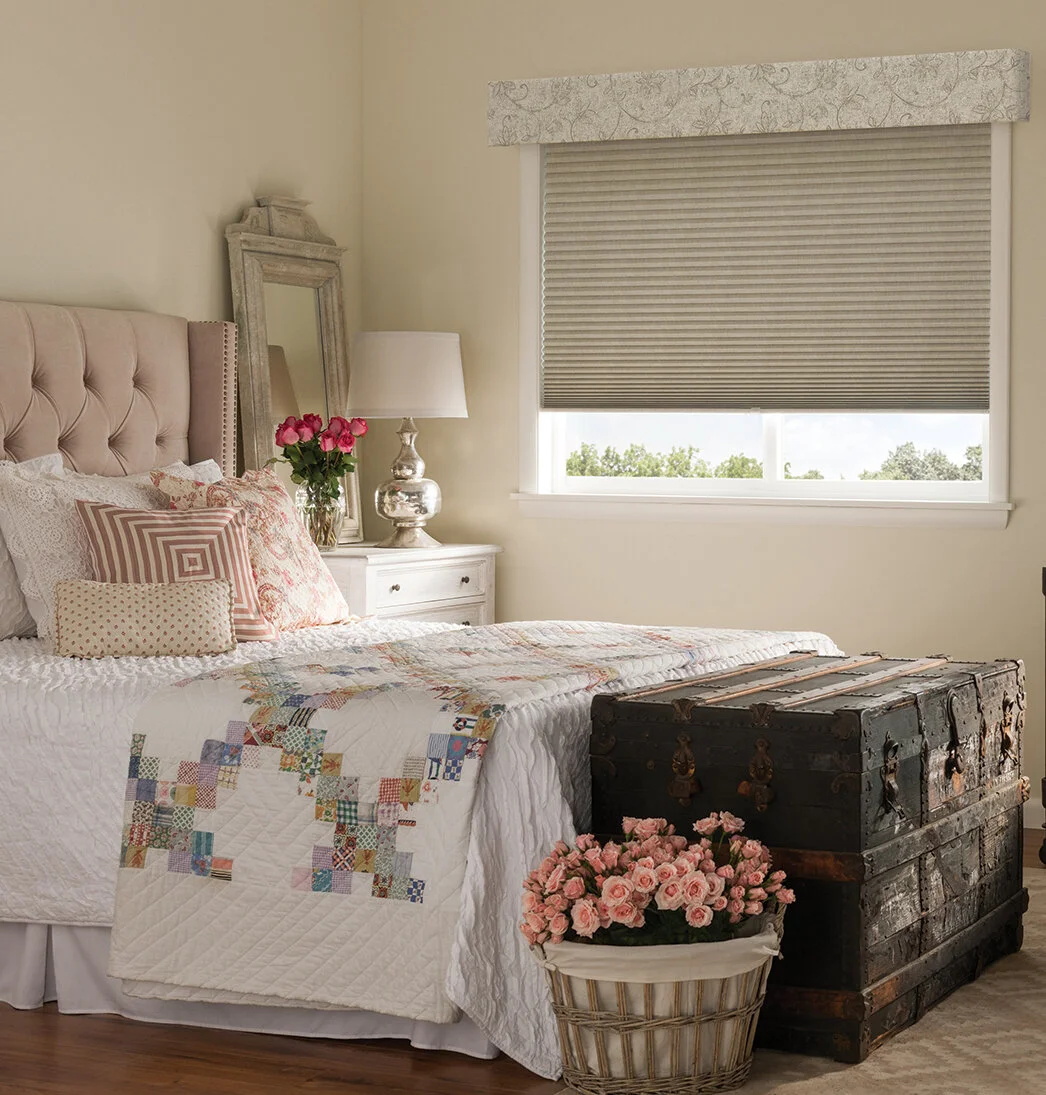
Cellular shades, also known as honeycomb shades, are one of the most popular choices for homeowners seeking better insulation at the window. Their fabric is formed into cells that trap air, creating pockets between the glass and the room.
This construction distinguishes cellular shades from flat fabrics. Instead of relying on a single layer, the shade uses its three-dimensional structure to create an insulating barrier.
Cellular shades are available in numerous colors, textures, cell sizes, and opacity levels. They can be used in bedrooms, living rooms, dining rooms, home offices, and many other spaces.
Single-Cell Cellular Shades
Single-cell shades contain one row of honeycomb-shaped air pockets. They provide insulation while maintaining a relatively slim profile.
These shades may be suitable when you want a balance of energy efficiency, streamlined appearance, and manageable stack size. The exact performance will depend on the fabric, cell size, fit, and product construction.
Double-Cell Cellular Shades
Double-cell shades contain an additional row of air pockets. The layered construction can provide greater insulating potential than a comparable single-cell design.
Because more fabric and structure are involved, double-cell shades may have a fuller profile. Their suitability can depend on the size and depth of the window.
For windows that are a major source of discomfort during cold weather, comparing single- and double-cell options can be worthwhile.
Cell Size and Window Proportions
Cellular shades are available with different cell sizes. Larger cells can look proportional on broad or tall windows, while smaller cells may complement more compact openings.
Cell size can also affect the depth and appearance of the shade. The best option should be selected according to the window dimensions, mounting space, and desired visual scale rather than insulation alone.
Light-Filtering Versus Room-Darkening Cellular Shades
Cellular shades are commonly available in light-filtering and room-darkening materials. Both constructions can contribute to insulation, but they create very different lighting conditions.
Light-Filtering Cellular Shades
Light-filtering fabrics soften sunlight and provide privacy while allowing the room to remain naturally illuminated. They can reduce the intensity of direct light without making the space feel closed off.
These shades may work well in:
Living rooms
Dining areas
Kitchens
Hallways
Home offices
Rooms where daylight is a priority
The exact level of privacy varies by material. A fabric that provides adequate privacy during daylight may appear different at night when interior lights are on. Examine samples under the lighting conditions that matter in your home.
Room-Darkening Cellular Shades
Room-darkening cellular shades use materials designed to block a larger amount of incoming light. They are commonly selected for bedrooms, media rooms, and other spaces where stronger light control is desired.
The denser or lined construction may also support insulating performance. However, room-darkening fabric does not automatically mean the room will become completely dark. Small amounts of light may enter along the sides, top, or bottom of an inside-mounted shade.
If darkness and insulation are both high priorities, the entire installation—including mounting style and edge coverage—should be planned accordingly.
The Importance of a Close Fit
The construction of a shade matters, but so does the fit. Gaps around the treatment can allow air and sunlight to move around its edges, reducing its effectiveness.
Custom shades are measured for the specific opening. Even windows that appear identical may differ slightly in width, height, depth, or squareness. Professional measuring accounts for these variations.
For an inside mount, the shade must be narrow enough to operate within the window opening. This naturally creates small side gaps, which vary depending on the product and control system.
An outside-mounted shade extends beyond the opening and may provide broader coverage. This can help reduce light gaps and cover more of the area around the window, although it creates a different visual appearance.
The appropriate mounting style depends on:
Available window depth
Trim and molding
Window locks and handles
Desired light control
Desired insulation
Wall or trim mounting space
Window shape
Preferred appearance
A professional can explain the tradeoffs between a recessed inside mount and the increased coverage an outside mount may provide.
Top-Down/Bottom-Up Shades for Flexible Comfort
Certain cellular shades are available with top-down/bottom-up operation. This design allows the upper portion of the shade to be lowered while the bottom portion remains covered.
The configuration is useful when a room needs privacy at eye level but would benefit from daylight entering near the top of the window. It can be especially practical for bedrooms, bathrooms, street-facing rooms, and home offices.
From an energy-efficiency perspective, opening any portion of the shade reduces its full insulating coverage. However, top-down/bottom-up operation gives homeowners more control over the compromise between daylight, privacy, and insulation.
During cold periods or intense sun exposure, the shade can be fully closed. During milder conditions, it can be adjusted to admit light where privacy is less of a concern.
Roman Shades and Energy Efficiency
Roman shades provide a soft fabric appearance with horizontal folds that rise neatly as the treatment is opened. Although their construction differs from cellular shades, they can still contribute to window insulation.
The energy performance of a Roman shade depends on:
Fabric weight
Lining
Interlining, when available
Fullness and construction
Mounting style
Coverage beyond the opening
Fit at the top and sides
A lined Roman shade generally provides more substance than a single unlined fabric. An outside mount can extend past the edges of the window to increase coverage.
Roman shades are especially useful when homeowners want to combine practical window coverage with visible fabric, color, texture, or pattern. They can coordinate with other custom treatments throughout the home while providing privacy and light control.
Because fabrics vary significantly, ask how the selected material and lining will affect both appearance and function.
Roller Shades for Solar Heat and Glare Control
Roller shades use a flat material that rolls onto a tube when raised. Their simple profile makes them versatile for many types of interiors.
The energy-related value of a roller shade depends primarily on the material and how the shade is used. A more opaque fabric can block substantial sunlight, while a solar material can reduce glare and solar heat while preserving some exterior visibility.
Light-Filtering Roller Shades
Light-filtering roller fabrics soften sunlight and offer varying degrees of privacy. They are available in many colors, textures, and patterns.
Lighter colors may reflect more sunlight toward the window, while darker materials may provide stronger glare reduction and outward visibility in certain fabric categories. Performance varies, so samples should be evaluated for the specific exposure.
Room-Darkening Roller Shades
Room-darkening roller shades block a greater amount of incoming light. By limiting direct sun, they can help reduce heat gain at exposed windows.
As with other inside-mounted products, side gaps will typically remain. An outside mount or specialized edge treatment may be considered when broader coverage is important.
Solar Shades
Solar shades are designed to reduce glare, manage UV exposure, and limit solar heat while preserving varying levels of outward visibility.
These fabrics are described partly by their openness factor. A more open fabric provides a clearer view but allows more light through. A tighter weave blocks more sunlight and increases daytime privacy, although exterior visibility becomes more limited.
Solar shades are particularly useful on windows where direct sunlight creates glare or overheating. They are not typically the first choice for winter insulation because their construction does not trap air like a cellular shade. Their strength lies in solar management.
Understanding Solar Shade Openness
Selecting an openness factor requires balancing view, glare control, privacy, and sunlight reduction.
Lower Openness
A lower openness factor means the fabric has a tighter weave. It blocks more sunlight and provides greater daytime privacy. It can also reduce the exterior view.
This may be appropriate for windows with intense exposure or rooms where glare is a persistent concern.
Higher Openness
A higher openness factor allows a clearer view through the shade. It still filters sunlight, but more light enters the room.
This may work for windows where preserving the view is a priority and the solar exposure is less intense.
Fabric Color
Color also influences performance. Dark solar fabrics often provide better outward visibility and glare control, while lighter colors may reflect more solar energy. The exact results depend on the fabric collection.
Solar shades do not generally provide complete nighttime privacy. Once the interior is brighter than the exterior, visibility can reverse. If nighttime privacy is required, the window may need another opacity level or a layered treatment.
Layered Window Treatments for Greater Performance
Using more than one window treatment can provide flexible control over insulation, privacy, and light. Each layer can perform a different role.
For example:
A cellular shade can provide an insulating layer.
Drapery can increase side coverage and add another layer of fabric.
A solar shade can manage daytime glare.
Room-darkening drapery can improve evening privacy and light control.
A Roman shade can provide functional coverage while side panels add fabric at the edges.
Layering must be planned carefully so both treatments fit and operate without interfering with each other. The shade’s mounting depth, drapery rod projection, fabric stack, and window hardware all need to be considered.
A layered treatment may cost more than a single product, but it can provide a wider range of performance throughout the seasons.
Drapery as an Insulating Window Treatment
Custom drapery can contribute to comfort by creating a substantial fabric layer across the window. Its effectiveness depends on fabric selection, lining, fullness, fit, and how completely it covers the opening.
Drapery that extends beyond the sides of the window can help limit air movement around the glass. A treatment that reaches appropriately toward the floor or sill may provide more coverage than a narrow panel.
Lining can add body and improve light control. Certain applications may also allow for additional insulating layers.
Functional drapery must be closed to deliver its full coverage. Stationary decorative panels may soften the edges of a window but do not provide the same energy benefits if they do not extend across the glass.
For homeowners who appreciate fabric treatments, properly designed functional drapery can combine insulation, light management, privacy, and an elegant finished appearance.
Shutters and Window Insulation
Interior shutters are rigid window treatments with fitted frames, hinged panels, and adjustable louvers. When the panels and louvers are closed, they create an additional barrier between the room and the glass.
Shutters can help reduce direct sunlight and make the area near the window feel more protected. Their frames also provide structured coverage around the opening.
However, shutters and cellular shades offer different types of performance. Cellular shades use enclosed fabric pockets to trap air, while shutters rely on solid panels, frames, and overlapping louvers.
Shutters may appeal to homeowners who want:
Adjustable light control
A fitted architectural appearance
Flexible privacy
Durable construction
Easy access to the window
A treatment without hanging fabric
If insulation is the highest priority, compare the specific shutter product with cellular shades and layered solutions before making a decision.
Insulating Treatments for Large Windows
Large windows can provide beautiful views and abundant daylight, but they can also magnify temperature and glare concerns. Covering them requires attention to product weight, width, operation, and support.
A very wide shade may be difficult to operate or may exceed the manufacturer’s size limits. Dividing the window into several shades can make each treatment easier to use and allow more precise control.
When several shades are installed side by side, small gaps may remain between them. The location of those gaps should align with window mullions whenever possible.
For a large window, consider:
Whether one or several shades are needed
How the treatment will be raised and lowered
The amount of fabric stacking at the top
Alignment with window divisions
Side and center light gaps
Mounting depth
The weight of the material
The desired view when shades are open
Professional planning is particularly important for oversized treatments because incorrect specifications can affect both performance and appearance.

Energy-Efficient Shades for Bedrooms
Bedrooms often need insulation, privacy, and room-darkening performance. Cellular shades are a strong option because they can address all three priorities in one treatment.
A room-darkening cellular fabric can reduce incoming light while the cellular structure creates an insulating barrier. For a softer appearance or greater edge coverage, the shade may be paired with functional drapery.
The best treatment should also be easy to operate every morning and evening. Cordless controls can provide a clean appearance and eliminate accessible operating cords.
When evaluating a bedroom shade, consider:
Morning sunlight
Exterior lighting at night
Street-level privacy
Cold areas near the window
Side light gaps
Bed placement
Daily operating convenience
A custom consultation allows the treatment to be designed around both the window and the way the bedroom is used.
Energy-Efficient Shades for Living Rooms
Living rooms require flexible light control because they support different activities throughout the day. A treatment may need to reduce television glare in the afternoon, provide privacy in the evening, and allow natural light at other times.
Light-filtering cellular shades can soften sunlight while maintaining a bright atmosphere. Solar shades may be suitable where daytime glare and exterior visibility are the primary concerns. Roman shades can add insulating fabric while supporting a more decorative design.
If the living room has windows facing more than one direction, the same fabric may perform differently at each opening. Coordinated treatments can still be used, but opacity or operating details may need to vary.
The goal is to create a unified appearance without overlooking the functional needs of individual windows.
Energy-Efficient Shades for Home Offices
A home office needs light that supports productivity without creating constant screen glare. Direct sunlight can make monitors difficult to see and may cause the area near the window to become uncomfortably warm.
Solar shades are particularly useful for glare management because they reduce sunlight while maintaining some exterior visibility. Cellular shades may be more appropriate when winter insulation or privacy is the leading concern.
The ideal choice depends on:
Desk position
Screen orientation
Window exposure
Time of day the office is used
Need for video-call privacy
Desired exterior view
Seasonal comfort concerns
A shade that is easy to adjust allows the office to respond as sunlight moves across the window.
Choosing Fabric Colors for Energy Performance
Color affects both the appearance and solar performance of a window shade. Light colors often reflect more sunlight, while dark colors may absorb more heat. In solar fabrics, darker colors can sometimes provide stronger glare control and a clearer outward view.
The relationship is not always simple because fabric construction, backing, opacity, and openness also matter. Some materials use a light-colored exterior-facing surface and a different interior color to combine reflectivity with the preferred room appearance.
Do not select a shade based on color alone. Compare manufacturer information and view the fabric against the actual window.
Samples should be evaluated at different times of day. A color that appears neutral under showroom lighting may look warmer, cooler, darker, or more translucent in the home.
Operating Energy-Efficient Shades Strategically
Even the most insulating shade cannot provide its maximum benefit when it remains open. Daily operation plays an important role in energy performance.
During cold weather, shades can be closed at night to create an additional barrier at the glass. On sunny winter days, opening treatments on sun-facing windows may allow beneficial warmth and daylight to enter. They can then be closed again as temperatures fall.
During warm weather, closing shades before direct sunlight reaches the window can help limit heat gain. Waiting until the room has already become hot reduces the benefit.
A practical routine may include:
Closing shades at night during cold weather
Opening sun-facing shades during beneficial winter sunlight
Closing shades before strong summer sun enters
Adjusting treatments to reduce glare rather than turning on additional lighting
Keeping unused rooms covered when appropriate
Opening shades when outside temperatures and sunlight are comfortable
The ideal routine depends on the season, orientation of the windows, and how the rooms are used.
Cordless Operation and Ease of Use
A shade must be convenient enough to operate regularly. If a treatment is difficult to raise or lower, it may remain in one position and provide fewer practical energy benefits.
Cordless shades can be adjusted using the bottom rail or an attached handle, depending on the product. They offer a streamlined appearance and avoid accessible operating cords.
The size and location of the window should influence the operating choice. A cordless shade positioned behind a deep counter may be difficult to reach, even if it works well on a standard window.
When comparing controls, operate full-size samples and consider who will use the treatment. Ease of operation is an important part of long-term performance.
Professional Measuring Improves Performance
Custom measuring helps an energy-efficient shade provide the intended coverage. A professional will evaluate the opening in multiple places and identify factors that could affect fit or operation.
Measurements and observations may include:
Width at the top, middle, and bottom
Height at several locations
Available mounting depth
Window squareness
Trim dimensions
Locks, handles, and cranks
Sill projection
Nearby walls or cabinetry
Desired overlap for an outside mount
Alignment across adjacent windows
The specialist will also confirm whether the selected headrail or mounting hardware can fit within the opening.
Precise measurements are particularly important for windows that appear similar. Slight differences may require each shade to be manufactured to its own dimensions.
Professional Installation Matters
Proper installation keeps the shade level, secure, and able to operate without rubbing against the opening. Brackets must be positioned according to the headrail and mounting surface.
During installation, the installer may:
Confirm each shade’s intended location
Position and level the brackets
Secure the headrail
Test the full range of movement
Check side clearances
Adjust the lower limit or stopping position
Install handles or hold-down components
Confirm alignment across window groupings
Demonstrate correct operation
An incorrectly positioned shade may hang unevenly, leave excessive gaps, or place unnecessary strain on the operating mechanism. Professional installation helps protect both the performance and appearance of the custom treatment.
Comparing Long-Term Value
Energy-efficient shades should be evaluated according to more than their initial price. Material quality, construction, fit, ease of use, appearance, and expected service all contribute to value.
A less expensive shade that is difficult to operate or poorly suited to the window may not be used consistently. Likewise, an insulating product that does not provide the desired privacy or appearance may need to be replaced earlier than expected.
When comparing options, ask:
How is the shade constructed?
Is it single-cell or double-cell?
What opacity level does it provide?
How closely will it fit the opening?
Is an inside or outside mount recommended?
How will the shade be operated?
What are the product’s size limitations?
What care does the fabric require?
Is professional installation included?
What warranty applies?
The best value is usually the treatment that addresses the window’s primary needs while remaining attractive and convenient to use.
Coordinate Energy-Efficient Treatments Throughout Your Home
Every room does not necessarily need the same window treatment. A coordinated plan can use cellular shades where insulation is most important, solar shades where glare is the leading concern, and drapery or shutters where those products better suit the room.
Consistency can be achieved through:
Related colors
Coordinated fabric textures
Similar headrail treatments
Repeated louver or pleat proportions
Complementary materials
Consistent mounting heights
Thoughtful opacity choices
Planning the entire home at once can help create a unified result, even if the treatments are installed in stages.
Find Energy-Efficient Shades in Rochester Hills
Selecting an energy-efficient shade requires balancing insulation, sunlight control, privacy, operation, and appearance. Cellular shades provide one of the strongest insulating constructions, while solar and roller shades can help manage intense sunlight and glare. Roman shades, drapery, shutters, and layered treatments offer additional ways to improve coverage and comfort.
The ideal choice depends on the individual window. Its size, direction, depth, hardware, and surrounding space all affect which product will perform best. A customized approach allows you to address different needs throughout the home without sacrificing a coordinated appearance.
Vertical Vic’s serves Rochester Hills, Mount Clemens, and surrounding Michigan communities with custom blinds, shades, drapery, and shutters. Its experienced staff can customize your order to fit your needs and offer options that provide sun control, insulation, and privacy while also being aesthetically pleasing.
Take advantage of Vertical Vic’s innovative ideas and excellent service. Bring your measurements into the showroom or schedule a free in-home consultation to receive a customized quote.
Call (586) 465-3631, toll-free at (866) 746-9744, or email info@verticalvics.com to begin planning your custom window treatments.