
A front window that fills the room with daylight can feel exposed once the lamps come on. A patio door can make a family room feel brighter all afternoon, then put a band of sunlight straight across the television. If you’re considering custom drapery in Troy, start with the window you already find yourself adjusting most. What would you like to see when the panels are open? What should they cover when they close? Those answers guide everything from the amount of fabric to where the brackets go.
Vertical Vic’s serves Troy homeowners from our showroom in Mount Clemens, Michigan. We work with blinds, shades, drapery, and shutters, so we can help you decide what a fabric panel should do on its own and where a second treatment could make the window easier to use. If you’re planning several rooms, you can make those decisions one opening at a time while keeping the finished treatments consistent where it matters.
Watch What Changes at Your Window Between Morning and Night
Across Troy, a room’s exposure and the view from outside can lead to different choices even for windows that look alike on paper. Picture a front sitting room near Big Beaver Road. During the day, you might want enough daylight to read while softening the view in from the sidewalk. After dinner, the lamps can make the room easier to see from outside. When planning custom drapery in Troy, check the same window with the room lit at night. Look from the sidewalk or driveway if you can, since the view from inside gives you only half the picture.
Use the same approach for sun control. If the afternoon sun lands across a work surface or a television, note when it happens and which part of the glass it comes through. You may only need to cover one side of a wide opening at that hour. On an east-facing window, see whether a short burst of morning light is the problem or whether the room needs softer light for several hours. Bring those observations to a consultation so you can compare how a sheer, a privacy lining, or a layered treatment would work at the times you actually use the room.
Decide What You Want the Panels to Do
Stationary panels for windows with a working shade or blind
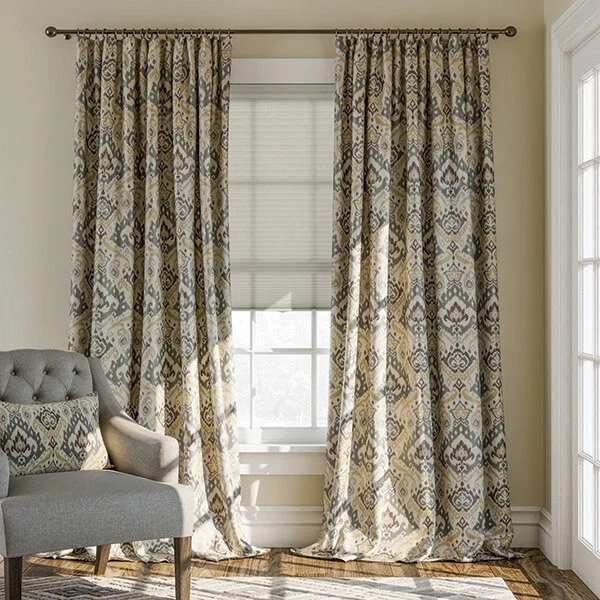
Stationary side panels frame the opening and stay in place. They can add fabric to the window while allowing a roller shade, cellular shade, or blind to do the daily work of adjusting light and privacy. This approach can make sense if you’re shopping for custom drapery in Troy and already have a treatment that operates well. Bring a picture of that treatment fully open, then another with it closed. A projecting headrail or a blind’s tilt control may determine how far forward the drapery needs to hang.
Think about what you see from your usual spot in the room. A side panel just beyond the glass may cover a strip of wall or trim, while a panel hung partly over the opening will reduce the view even when the shade is fully up. If a window sits tight against a corner on one side, a single panel on the other side may suit the opening. Compare that arrangement with a pair before assuming both sides have room for fabric.
Working panels for windows you cover regularly
Working panels travel across the window. A pair can close at the center, or a single panel can cover the opening from one side to the other. For a street-facing window, a center pair can let you open either side independently. For a sliding door, a one-way draw can keep fabric away from the moving section when the panels are open. The best direction is the one you’ll find convenient when your hands are full or you’re moving through the room after dark.

Check How Much Glass You’ll See With the Drapery Open
Fabric gathers when you open a drapery panel. The width it takes up in that position is called the stackback. With custom drapery in Troy, planning for stackback is especially worthwhile on a wide picture window or a group of windows overlooking a backyard. A rod drawn just wide enough to cover the trim can leave folds in front of the glass throughout the day. Extending it onto the adjacent wall, where there’s space and support for the hardware, can give those folds somewhere to go.
Fabric thickness, fullness, and the style at the top all affect how much room the panel needs. Even two fabrics with a similar appearance can gather differently. Ask to see the fabric bunched up as well as held flat. If a wall ends right at the window, check whether there’s more room on the opposite side for a one-way draw. With windows meeting near a corner, plan the two sets together so the open panels have enough space and can move without interfering with each other.
Choose Fabric and Lining at the Window
Sheer and light-filtering fabrics
If you want daytime light to reach deeper into the room, hold a sheer or light-filtering sample up against the glass. See how much of the outdoors you can still make out and where the brighter patches of sunlight fall. For custom drapery in Troy, a sheer layer can be a good starting point for a room that feels too bright in direct sun but gets used throughout the day. If you also need evening privacy, consider adding an operable lined panel or a separate shade you can lower when the lights come on.
Privacy linings and room-darkening options
A privacy lining can give a fabric more body and help block views from outside. A room-darkening lining can make sense for a bedroom or a media room where light through the fabric is a concern. Look beyond the lining when evaluating custom drapery in Troy for either room. Light can still show above the track, along the sides, or where two panels meet. Depending on the hardware and the opening, fabric that wraps toward the wall at the outer edges or panels that overlap at the center may improve coverage.
Hold samples to the window on a bright day and look at them again under lamps. A fabric that reads as creamy white with sunlight behind it can look different under warm bulbs. Compare the fabric with its proposed lining in place, since a lining can change the way the face fabric looks with light coming through. For a print, ask to see enough material to judge the full pattern repeat. A small swatch can miss the part of the design that appears at eye level on a finished panel.
If you’re drawn to patterned drapery, look at the sample with a few folds in it. A wide stripe can look crisp across a swatch and almost disappear into the pleats on a narrow panel. A small repeated motif usually stays more visible across the face of the fabric. If two panels close at the center, ask how the design will meet there when the drapery is drawn.
Plan for Winter Comfort Around the Window
On a cold Oakland County evening, the seat nearest the glass may feel cooler than the rest of the room. If that’s one reason you’re looking at custom drapery in Troy, ask about insulating options and how they’d sit at your particular window. A lined drapery that extends beyond the frame and closes close to the wall can help limit air movement between the cold glass and the room. Window condition, lining, and gaps around the treatment all affect the result, so two windows with the same fabric can feel different.
Look below the window before choosing a hem length. Note any projecting sill or uneven floor, and mention it when you discuss the treatment. Check where the fabric will hang when the panel is fully open and fully closed. If a floor-length panel would be in the way, compare a shorter drapery or a shade that sits within the opening. In a room with several exposures, you can reserve heavier lining for the windows where winter comfort matters most and use a lighter fabric where you prefer more daylight.
Match the Treatment to the Way Each Troy Room Is Used
Front rooms near a sidewalk or shared walkway
In a Troy living room facing a sidewalk, consider where someone would be standing when they can see inside. A view from the driveway can come in at an angle and reveal a gap you wouldn’t notice standing squarely in front of the window. If daytime privacy matters there, a shade that covers the lower part of the opening can be paired with drapery that closes after dark, subject to the window’s dimensions and available products. When comparing custom drapery in Troy for a ground-floor room, describe how close those exterior sightlines are and whether you want to keep daylight coming through the upper glass.
Bedrooms with early light or nearby streetlights
If daylight wakes you before your alarm, look for the first bright edge you see from bed. A window next to a corner may have little wall space for the fabric to extend, while a center gap may be the issue on a broad window. A room-darkening shade behind fitted drapery gives you two ways to manage that light. You can raise the shade during the day and leave the fabric open, then close both at bedtime. For a bedroom that mainly needs nighttime privacy, a lined working panel may provide enough coverage on its own.
Patio doors and busy paths to the backyard
For a slider in a Troy family room, check which side opens and where your hand lands when reaching for the latch. Start there when designing custom drapery in Troy for a patio door. A panel that parks away from the active side can leave the handle and walking path accessible. The track also needs enough extension for fabric to clear the opening if that’s your goal. A floor-skimming hem or one that sits slightly above the floor is often easier to move repeatedly through a busy doorway than fabric that rests on the floor. Walk through the door during the consultation to show which side you use and how wide you usually open it.
Select a Pleat and Hardware You’ll Enjoy Using
The top of the panel shapes how the fabric hangs and how it moves. A pinch pleat gathers fabric at stitched points, giving the panel distinct folds. A ripple-fold treatment uses compatible track hardware to guide the fabric into a regular wave. When you’re comparing custom drapery in Troy for a broad window, look at each style fully open and fully closed. The amount of space a folded panel needs at the top can differ from how wide it looks near the floor.
Ask how you’ll move the treatment day to day. A wand lets you lead the panel across without pulling on the fabric, while a track needs a mounting plan suited to the weight and travel of the panels. Decorative rods can bring the hardware into view. If a center support is needed, confirm whether the chosen rings or carriers can pass it for the draw you want. Look at how far the brackets project from the wall too. The folds need room to clear trim, window cranks, and any blind or shade behind them.
Take Measurements That Show the Whole Opening
If you’re bringing measurements to the Mount Clemens showroom, start with the width and height of each window and record whether your numbers include the trim. Note the distance to the floor, the wall space on both sides, and the room above the casing. For custom drapery in Troy, those extra measurements help the staff see whether there’s space for a working panel, where the track could go, and how much glass could stay clear. A photo of the whole wall is often more useful at this stage than a close-up of the glass alone.
For a tall opening or a set of windows that share a wall, measure each one separately. Windows that look identical from across the room can sit at different heights or have different amounts of usable wall on either side. Mention changes you’re planning to the window, floor, or trim so the final measurements reflect the finished room. For a floor-length treatment, have the height checked at several points along the planned span. A small change in the floor height can make one end of a panel touch while the other hangs freely.
If you’re considering a higher mount, mark the proposed track height with removable tape and step back to your usual seat. It’s easier to judge the proportions when you can see the line across the opening. Include any ceiling slope or change in height in your photos. That detail can determine how far the track can extend past the frame on each side.
Combine Drapery With Shades, Blinds, or Shutters
A second treatment can give the window two settings that are useful at different times of day. At a west-facing window, a solar shade can reduce afternoon glare while retaining some view, depending on the fabric. A lined drapery can provide privacy once the room is lit at night. When choosing custom drapery in Troy for a window that already has shutters, check how far the shutter panels swing into the room. If you want to open them fully for cleaning or access to the glass, the fabric and hardware need to stay clear of that path.
An existing blind may offer enough flexibility on its own during daylight hours. Tilt the slats to see whether you can direct the light comfortably and then decide how much the drapery needs to do after dark. When two treatments share an opening, operate the inner one through its full range before settling on the outer one. Raise a shade, turn a wand, open a shutter, and reach for the window lock. That quick check reveals how much clearance you need and which controls must stay accessible after the drapery is installed.
Plan for Wide Windows and Rooms With Several Openings
A wall of windows can look like one continuous opening from a distance. Up close, the handles, trim, and sections of glass often work independently. In a Troy home with a picture window between two operable windows, identify which sections you open for fresh air and which sections you cover to manage glare. For custom drapery in Troy on this kind of window wall, a continuous track can allow the fabric to span the opening, while separate groups of panels give you control over individual sections. Compare the stack location and the points where the panels meet under both arrangements.
If adjacent rooms are visible from the same spot, bring photos of both window walls. You can carry the same fabric or heading across the rooms and change the lining or the way the panels draw where needed. Check the daylight in each room before ordering. A weave with a subtle texture may look relatively even at one window and show more detail when backlit at another. For an order with multiple widths, ask how a strong pattern will be placed across the panels, particularly at the center of the widest window.
For upstairs windows that line up over downstairs windows on the front of a Troy house, look at the backs of both treatments from outside. The panels may have different fabrics on the room side, and a similar lining color can help the windows look related from the street. Ask for a sample of the lining.
Review the Details Behind Your Customized Quote
A quote for custom drapery in Troy should help you picture the finished window and understand what’s included. Review the fabric, lining, heading, panel arrangement, hardware, and measurements for each opening. Check where the panels will gather, where the hardware will sit, and whether the quoted design covers the glass and any edges you want covered. If you’re comparing two options, ask to see them for the same opening with the same basic requirements. It’s easier to weigh a lining upgrade or different track when you can see exactly which part of the design changes.
Let the team know what is already at the window. Mention old hardware that may need removal, blinds that you plan to keep, and any openings where the wall or ceiling may affect mounting. Ask what the quote includes for measurement, installation, or removal if those services are part of your project. If you’re ordering in phases, consider starting with the window that causes a daily problem and recording the fabric and hardware details for the next room. Ask about care as well, especially for fabrics near a frequently opened patio door or in a room where they’ll get direct sun.
Visit Vertical Vic’s or Schedule a Free In-Home Consultation
Vertical Vic’s serves Troy, Mount Clemens, and the surrounding communities in southeast Michigan. Our experienced staff can customize your order to fit your needs and help you choose options for sun control, insulation, and privacy while creating a finished look you’ll enjoy. Take advantage of our innovative ideas and excellent service, whether you’re starting with one window or coordinating treatments throughout your home. If you already have blinds, shades, or shutters you want to keep, we can discuss how to work them into the plan for your drapery.
Ready to explore custom drapery in Troy? Bring your measurements into our Mount Clemens showroom or schedule a free in-home consultation to receive a customized quote. If you have photos, bring one with the current treatment open and another with it closed so we can talk through what you want to change. Call Vertical Vic’s locally at (586) 465-3631, call toll-free at (866) 746-9744, or email info@verticalvics.com.